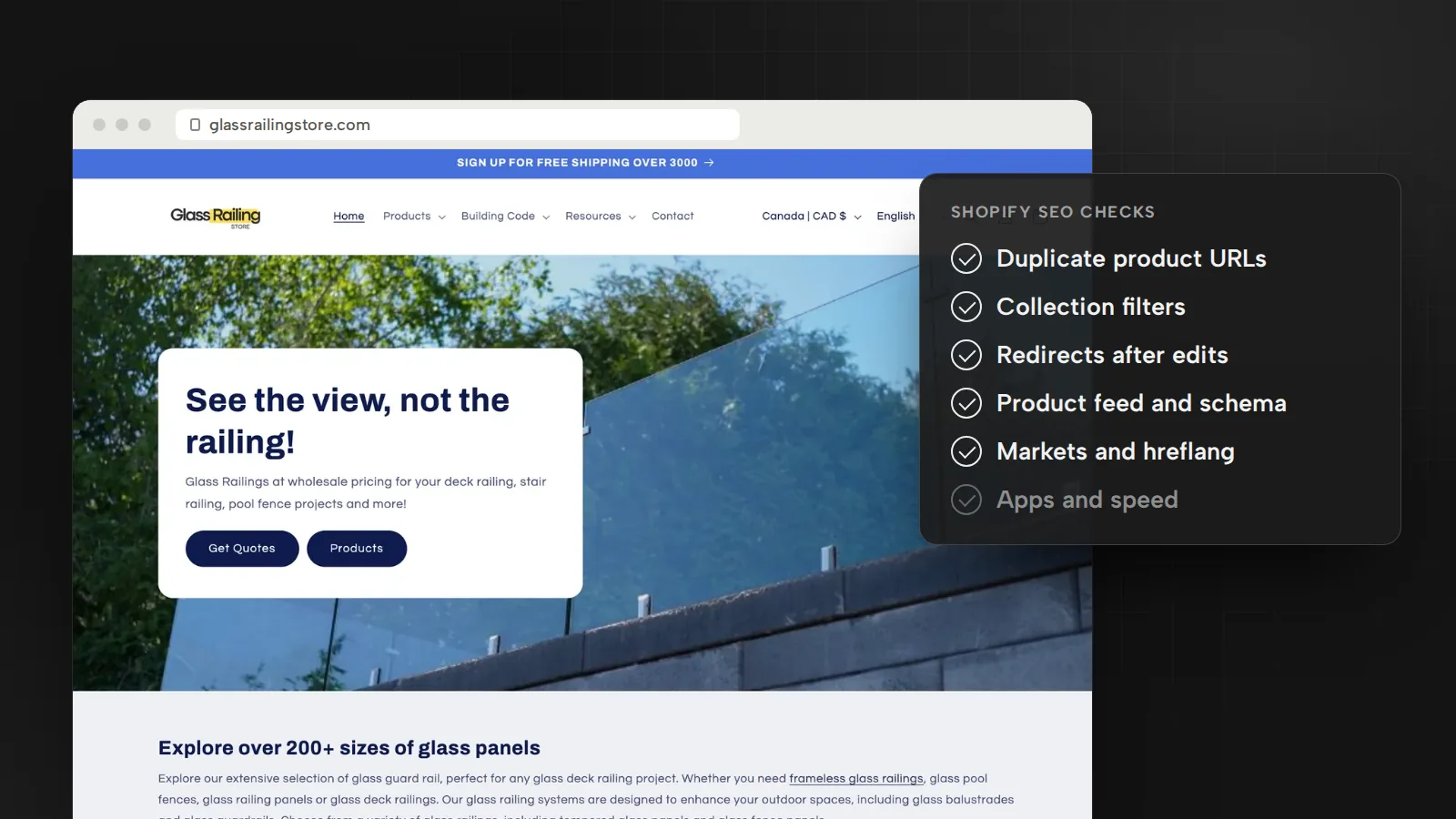
When nobody owns the whole marketing plan, each agency and freelancer reports its own numbers and nobody can say which channel brings the orders. That is the gap a fractional marketing director fills.
I lead marketing for two brands at once: RF Transparent, a B2B company, and Glass Railing Store, an online store, with a team of seven and a yearly ad budget above $460,000 on Google and Meta. I bring the same system to other companies as a fractional director.
What a fractional marketing director does
A fractional marketing director does the job of a full-time director for a set number of days each month. Fractional describes the time, not the job: the director sets the strategy, owns the budget, directs the people doing the work and answers to the CEO for the results.
- Strategy: the yearly plan, positioning and messaging, competitor research and a monthly marketing calendar.
- Budget: what goes to Google, Meta and every other channel, and when it moves.
- Team: weekly direction for staff, agencies and freelancers across SEO, ads, social media and content.
- Reporting: a KPI target for every channel and reports the leadership team can act on.
The hands-on work usually stays with your team, an agency or freelancers. A good director also removes manual work: for the brands I lead, a pipeline I built gets every Meta lead to the sales team in under five minutes.
Fractional director, agency, freelancer or full-time CMO
Each can be the right choice. The difference is who decides and who does the work.
- An agency runs channels such as ads or SEO and reports on its own work. It is paid to run its channel, so whether budget should leave that channel is a call for someone else.
- A freelancer does one job well, such as ads, design, copy or video, and needs a brief and priorities from someone else.
- A full-time CMO or marketing director leads every day and builds the team for the long term. It is the right hire once leading marketing is a full-time job.
- A fractional director owns the plan and the numbers, sits above the agency and the freelancers and reports to the CEO, for the share of the month you need.
They work best together: the director sets the plan and holds the agency and the freelancers to it.
Signs it is time to hire one
- Ad spend keeps growing, but nobody can say which channel brings the orders.
- Google Ads, Meta, Google Analytics and your store or CRM all show different numbers.
- The owner still approves every campaign, post and budget change.
- You have good specialists, but nobody sets priorities between them.
- A new product line, market or brand needs a plan before it needs a campaign.
- Leads wait hours for a reply, and the monthly report is rebuilt by hand.
If you only need one job done, such as a new website or a single campaign, a one-time strategy session, an audit or the right specialist fits better than a director.
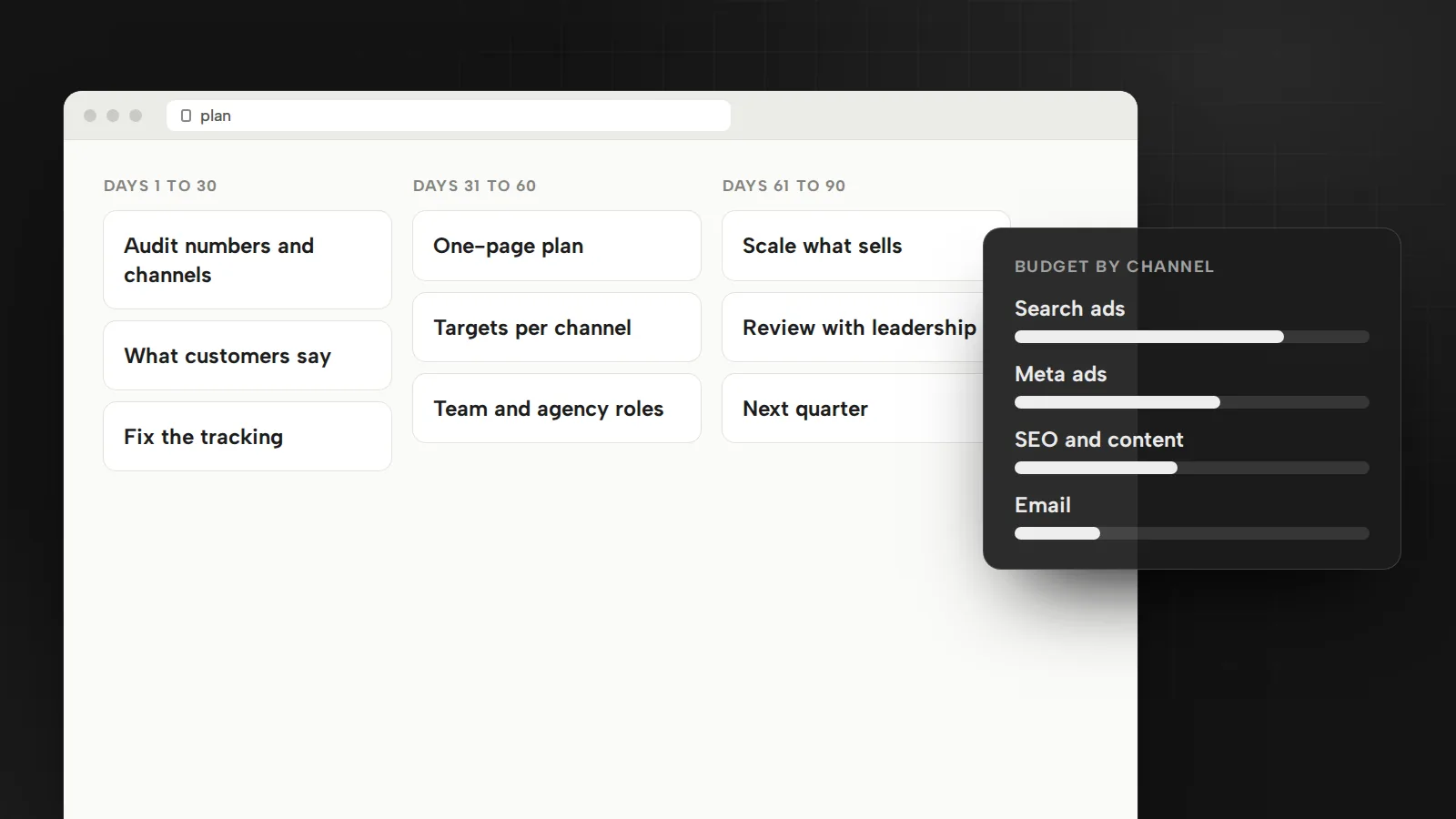
The first 90 days
This is the order I follow:
- Audit. Sales and leads by channel, where the budget goes, who does what, how fast leads get an answer and what customers say in reviews and sales calls. Check who owns each account too: the domain, ad accounts, analytics and store should be in the company’s name.
- Tracking. Every lead and sale counted once and tied to its source: key events in Google Analytics, conversions in Google Ads and Meta, and consent that fits the privacy rules where your customers live, which I cover in consent and tracking in Canada.
- Plan. One page with targets, budget and an owner for every channel, plus what gets tested and what stops.
- Team and vendors. Each person and agency gets a scope, a target, a reporting date and weekly direction. Google’s guide to working with third parties says an agency must set up a separate Ads account for you, that you have the right to know the clicks, impressions and total cost of your ads, and that you should understand any fees on top. Google’s third-party policy also requires anyone who manages your Google ads to give you your customer ID when you ask.
- Reporting to the CEO. A monthly report from the first month, then 60-day and 90-day reviews with leadership that decide what to scale, what to cut and what goes into the next plan.
What to expect in monthly reporting
A monthly report should be short and answer four questions: what we spent, what it brought, what we learned and what changes next month. Expect these parts:
- Sales or leads from the source of truth, such as Shopify or your CRM, by channel, compared with the previous period and the same dates last year.
- Spend and return for each channel and campaign, with a clear verdict: raise, cut, pause or refresh.
- Targets against results for every channel, with the reason for any gap.
- Next steps, each with an owner and a date.
Be careful with a report built only from ad dashboards. Google made data-driven attribution the default in Google Ads and Google Analytics, and it shares the credit for a sale among the ad interactions that led to it. Each ad platform sees only its own ads, so the same order can show up in both Google Ads and Meta. By default, Google Analytics can also credit clicks from up to 90 days before a sale, and data-driven attribution can reattribute a conversion for up to 7 days, so a month’s numbers can still change after it ends. That is why the 60-day and 90-day reviews matter.
For the two brands I lead, I report to the CEO every month, at 60 and 90 days and every year. At Glass Railing Store, I follow sales, ad spend and return on ad spend in an internal app I built that joins Shopify, Google Ads, Meta and Google Analytics. It checks the sales Meta claims against real Shopify orders and lists the customers each platform reached, so the team can call them and ask where they first saw the brand.
How to evaluate a fractional marketing director
Interview a fractional director like any senior leader. Ask about:
- Leadership, not only channel skills. The size of the team and budget they have led, and case studies with dated numbers.
- Their first 90 days. A good answer starts with questions about your numbers and customers, not a pitch for one channel.
- A sample report with the figures hidden, so you know what you will read every month.
- Their time. Days per month, how fast they answer your team and who does the hands-on work.
- Independence. Whether they take fees or commissions from the agencies and tools they recommend.
Then check access. They should ask for their own login in accounts you own, never your password. In Google Ads only the Admin access level can add users or unlink a manager account, and in Google Analytics only the Administrator role can manage users, so keep someone inside the company in both roles. On Shopify, agencies and freelancers can request a collaborator account, which you approve and can remove from your admin.
Walk away from anyone who promises a guaranteed position on Google: Google says no one can guarantee a specific ad position on its search results pages. And put the scope in a written agreement, as Google advises for ad agencies: days per month, deliverables, reporting dates, notice period and who owns the work.
How I work as a fractional director
My process is the one above: an audit, a 90-day plan, weekly direction for the team and any agencies, and reviews with leadership. It is the system behind the Glass Railing Store results, where US sales grew 46% year over year in the first nine months of 2026 and both brands became the top two glass railing companies in Canada for organic Google visibility within 8 months.
If you need that leadership without a full-time hire, see my fractional marketing director services. If your team loses hours copying data between tools, start with AI automation.
Sources
- Advertiser guide: Working with third partiesGoogle Advertising Policies Help, October 2026
- Google third-party policyGoogle Advertising Policies Help, October 2026
- About access levels in your Google Ads accountGoogle Ads Help, October 2026
- Access and data-restriction managementGoogle Analytics Help, October 2026
- Collaborator accountsShopify Help Center, October 2026
- First click, linear, time decay, and position-based attribution models are going awayGoogle Ads Help, April 2023
- Get started with attributionGoogle Analytics Help, October 2026
- Select attribution settingsGoogle Analytics Help, October 2026

Bugrahan Unsal is a B2B and B2C marketing director in Toronto. He leads marketing for Glass Railing Store and RF Transparent and builds AI tools and websites. More about Bugrahan.
Follow on LinkedIn (opens in a new tab)