1. Be one clear entity
An assistant has to be sure who you are before it recommends you. Use the same name, description, city and contact details on your website, LinkedIn, Google Business Profile and the directories you appear in. Then say it in code: add Organization or Person structured data and list your official profiles in sameAs.
2. Answer first, then prove it
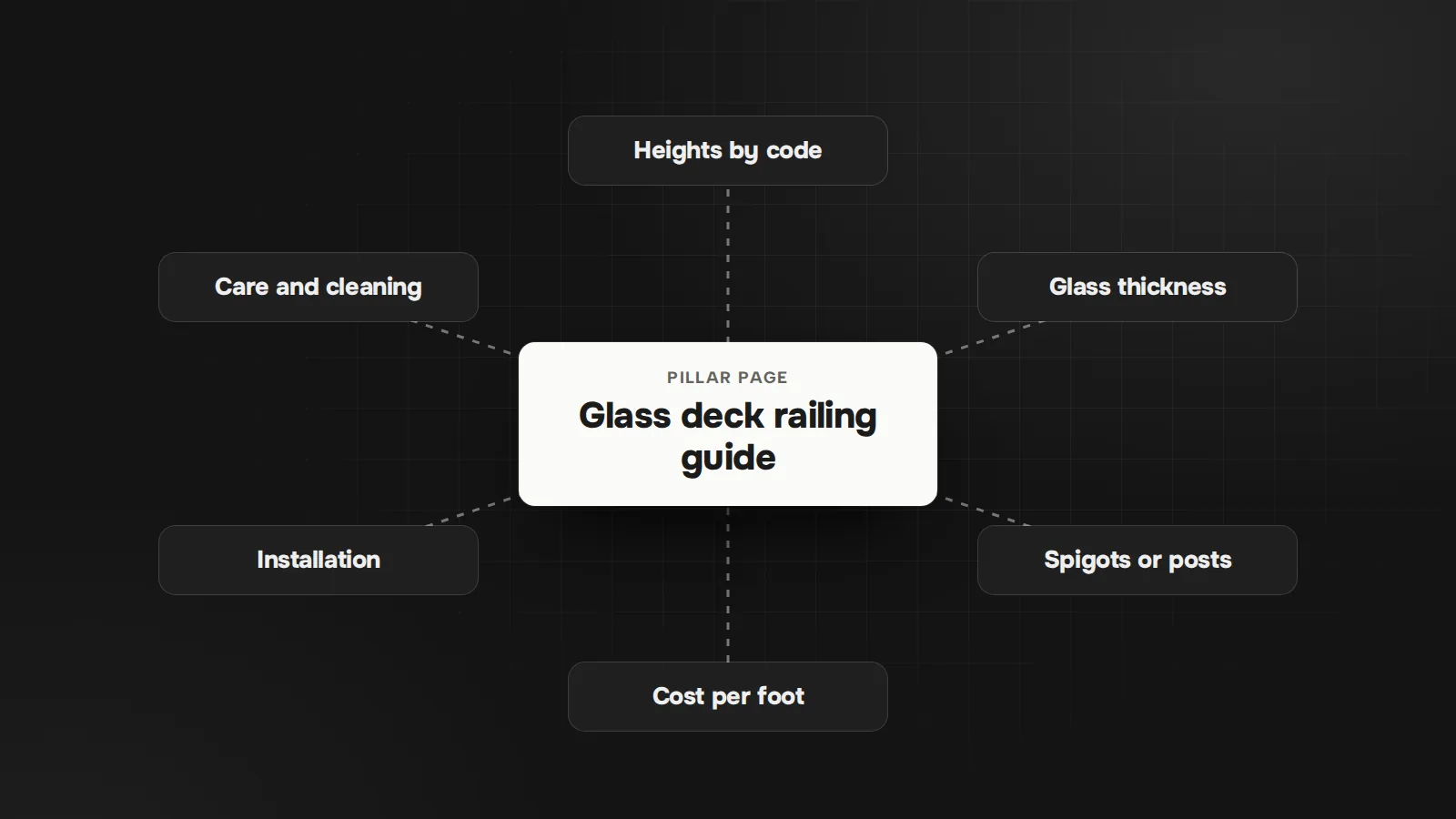
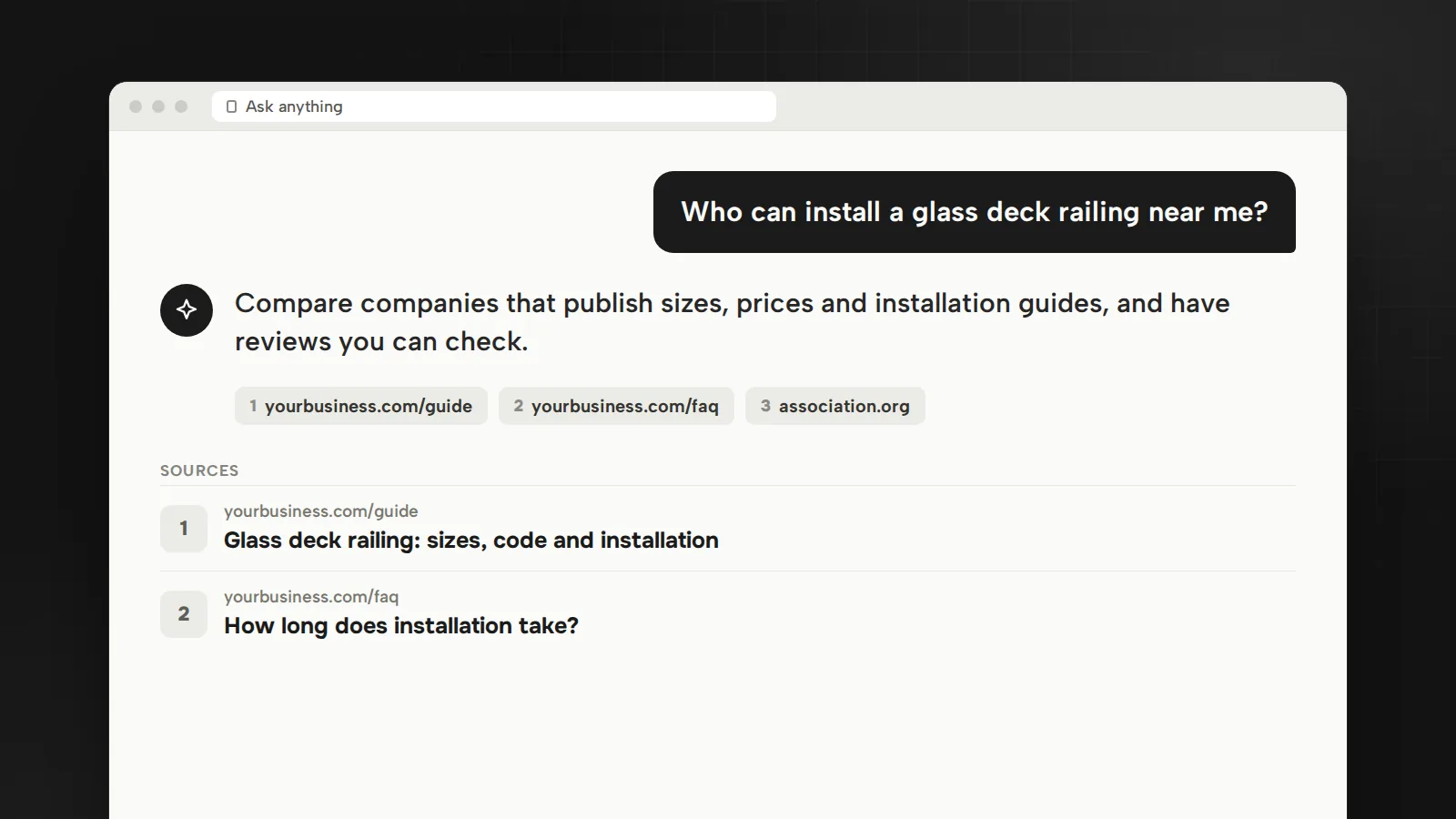
Give each important question its own page and answer it in the first paragraph. Details, steps and examples come after. This is how I structure every service page in my SEO and AI search work.
3. Publish proof with numbers and dates
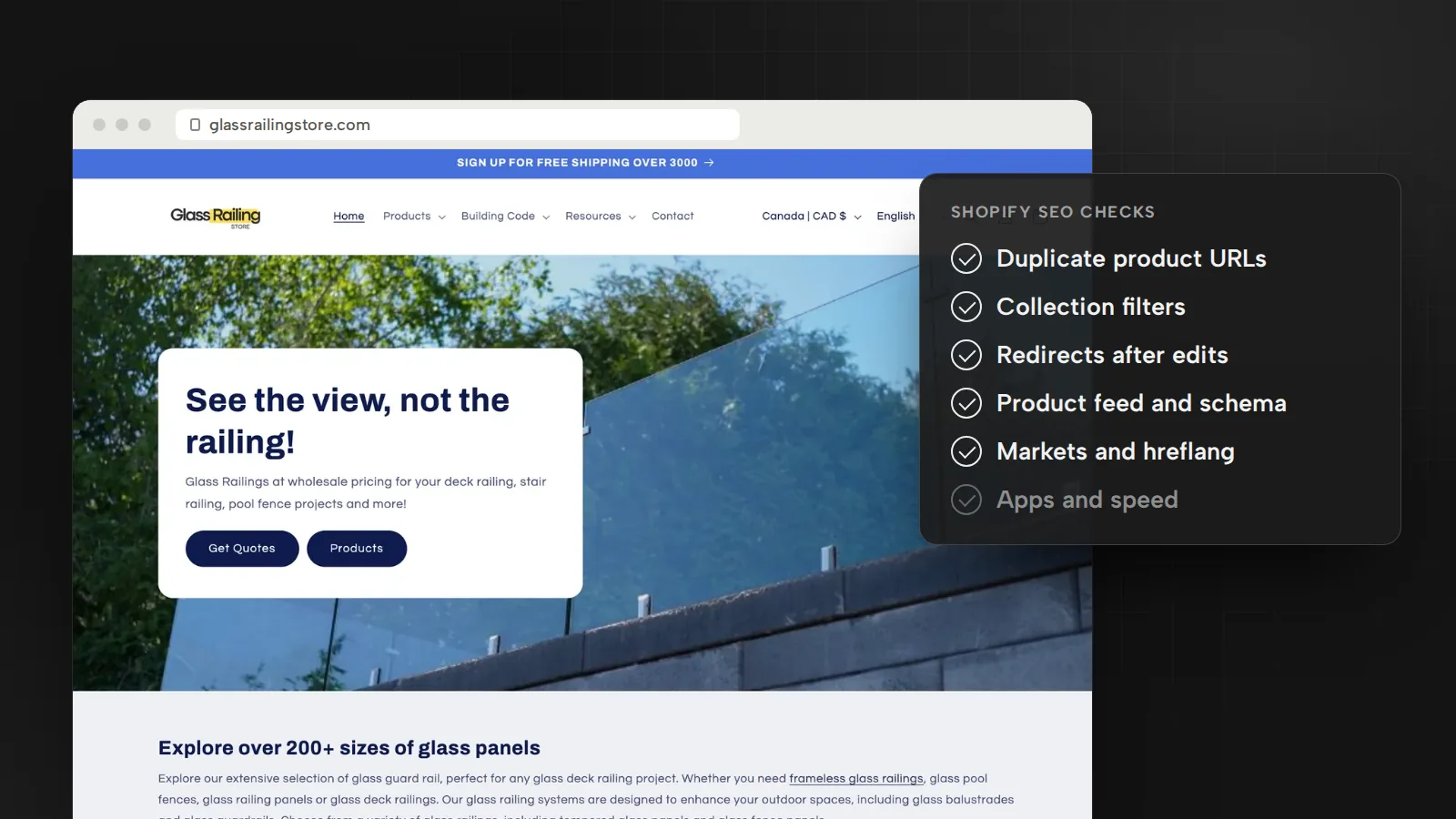
Specific, dated statements are easier to quote and to check. “US sales grew 46% year over year in the first nine months of 2026” says more than “strong growth”. Put numbers in case studies with the period and the source, as in the Glass Railing Store case study.
4. Link your pages like a map
Internal links tell crawlers which pages matter and how they relate. Link each service to the work that proves it, each case study back to its services and every page to the next step, with anchor text that says what the page is about. The Lumen Painting website follows this pattern across 45 pages.
5. Let the right crawlers in
Assistants can only cite what they can read. Serve your main content as plain HTML, keep pages fast and check that robots.txt does not block the crawlers you want:
OAI-SearchBotandGPTBotfrom OpenAIClaudeBotfrom AnthropicPerplexityBotfrom PerplexityGoogle-Extended, Google’s control for AI training, which does not change Google Search rankings
6. Add an llms.txt file
llms.txt is a proposed standard: a short Markdown file at the root of your site that says who you are and links your most useful pages. Treat it as optional. Google’s May 2026 guide says you don’t need it to appear in Google’s AI features, but other assistants and browser agents can use it, and Chrome’s Lighthouse now checks for it in its agentic browsing audits. It takes an hour. This site has one at /llms.txt. What changed at Google this year is in SEO updates for 2027.
7. Earn mentions on other sites
Assistants lean on sources that other sources mention: local press, industry directories, partner pages, podcasts and conference lists. One honest mention on a respected site is worth more than ten pages written for keywords.
8. Measure AI referrals in GA4
In Google Analytics 4, open Traffic acquisition and look at session sources such as chatgpt.com, perplexity.ai, gemini.google.com, copilot.microsoft.com and claude.ai. Since May 13, 2026, GA4 also groups these visits in its own AI Assistant channel in the default channel group, so you can follow the trend each month without building a custom one.
Where to start
This month: make your name and details consistent everywhere, rewrite your top service page to answer first and add structured data. If you want help, it is part of my SEO and AI search visibility service, and a new website can be built this way from day one.
Sources
- What’s new in Google Analytics: AI Assistant traffic measurementGoogle Analytics Help, May 13, 2026
- A new resource for optimizing for generative AI in Google SearchGoogle Search Central, May 2026
- llms.txt audit in Lighthouse agentic browsingChrome for Developers, May 2026
- The /llms.txt file proposalllmstxt.org

Bugrahan Unsal is a B2B and B2C marketing director in Toronto. He leads marketing for Glass Railing Store and RF Transparent and builds AI tools and websites. More about Bugrahan.
Follow on LinkedIn (opens in a new tab)