Good SEO balances content quality, search intent, technical foundations and steady improvement based on data. When one of them slips, organic traffic usually falls slowly, so the problem is easy to miss and harder to reverse later.
Publishing weak, thin or outdated content
A major SEO mistake is publishing content that is shallow, outdated, repetitive or written without real expertise. Google’s guidance asks whether a page offers original information or analysis and covers its topic completely. Posts that barely scratch the surface leave questions unanswered, so readers leave and the business loses authority. Common weaknesses:
- Articles with no depth. More words won’t fix it: Google says it has no preferred word count.
- Generic writing with no real insight or examples.
- Outdated information. Update the facts, not just the date: Google lists new dates on unchanged pages as a sign of content made for search engines.
- Pages written for a keyword, not for the person searching.
Ignoring search intent and how people actually search
Targeting keywords without understanding why people search for them is one of the biggest SEO mistakes. Google says it first works out the intent behind a query, and it uses aggregated, anonymized interaction data to assess whether results are relevant. A page that misses the intent sends people back to the results, however well it is written.
I sort keywords into four intent types: informational, commercial, transactional and local. Each page should match its type. Mismatches usually look like this:
- Informational searches land on sales pages.
- Buyers get a blog post instead of a product page.
- People who want a comparison find generic text.
- Local searches land on national pages.
Weak technical SEO and poor site performance
Content can only rank if Google can crawl and index it, and slow or broken pages lose visitors even when they rank. Google’s core ranking systems look to reward a good page experience, including good Core Web Vitals for loading, responsiveness and visual stability, though relevance still comes first. The problems I find most often:
- Slow pages and large, uncompressed images.
- Moved pages without redirects, and redirect loops. A 404 for a page that is really gone is normal: Google says 404s don’t harm your site’s indexing or ranking.
- A poor mobile layout or content that shifts while it loads. Google indexes and ranks the mobile version of your pages.
- No structured data, which can make pages eligible for rich results, though Google doesn’t guarantee them.
- Too much JavaScript slowing rendering.
Update, October 2026: Since May 7, 2026, Google no longer shows FAQ rich results for any site, though it says there is no need to remove FAQ markup. More in SEO updates for 2027.
Publishing without a strategy or topic clusters
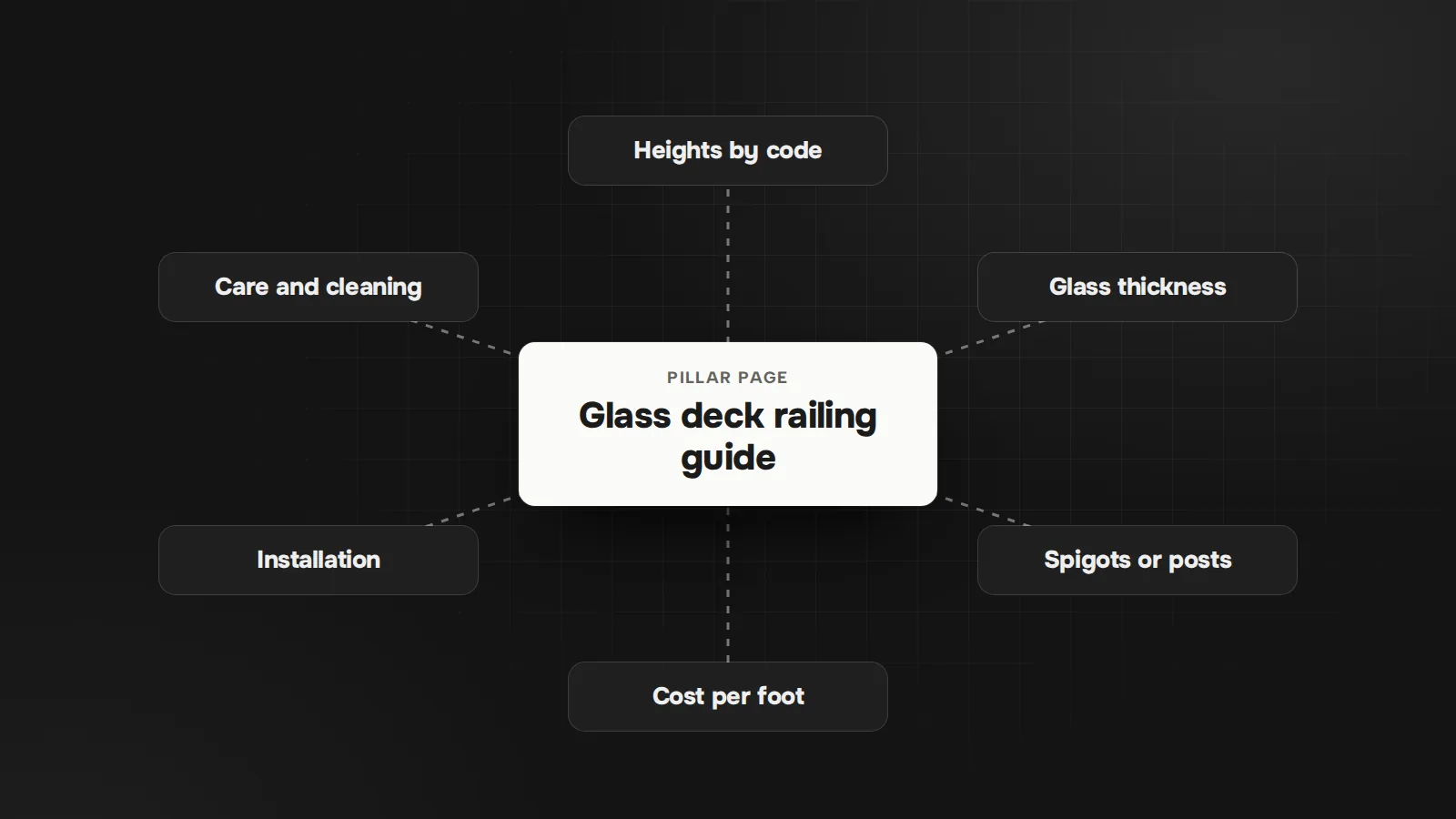
Random posting is not a strategy. Many businesses publish whatever they think might rank, with nothing connecting the pages. Topic clusters fix this: a pillar page covers a subject broadly, related articles each answer one question in depth, and they link to each other. That improves internal linking, topical focus and keyword coverage.
Google uses links to find pages and as a signal of relevance, and recommends that every page you care about has a link from at least one other page on your site. Isolated posts are harder for it to find and understand. Signs of a weak structure:
- No pillar pages or category hubs.
- Blog posts with no internal links.
- Several pages competing for the same keyword.
- No content roadmap.
Making decisions without analytics or tracking
SEO without analytics is guesswork. Many businesses watch impressions or traffic and ignore what matters more: engagement, leads and sales, ranking stability and how people move through the site. GA4, Search Console and heatmaps show what works, and misreading them wastes budget. The gaps I find most often:
- Calls, forms and purchases not tracked as key events in GA4, what GA4 used to call conversions.
- Search Console data that nobody reviews.
- No UTM structure, so campaigns can’t be compared.
- No analysis of drop-off pages or user journeys.
My guide to GA4 shows how to read this data and act on it.
Neglecting local SEO and your Google Business Profile
For small and local businesses, local SEO is one of the strongest ways to win customers, yet many treat it as optional. Google says local results are mainly based on relevance, distance and how well known a business is, including how many websites link to it and how many reviews it has. It also says complete, accurate information makes a business more likely to show up. The basics businesses overlook:
- Fresh photos, posts and product or service updates.
- Answers to the questions customers really ask.
- Location pages for areas you really serve, each with its own content. Google’s spam policies count city pages that funnel visitors to one page as doorways.
- Replies to reviews, and requests for new ones from every customer. Google’s policies forbid asking only happy customers or paying for reviews with money or discounts.
- The same name, address and phone number everywhere.
Update, October 2026: Google has since removed the public Q&A section from Business Profiles. The Q&A API shut down on November 3, 2025, and in December 2025 an AI-powered Ask button began taking its place, answering from the business’s own answers and reviews. Put your answers on your website too.
Where to start
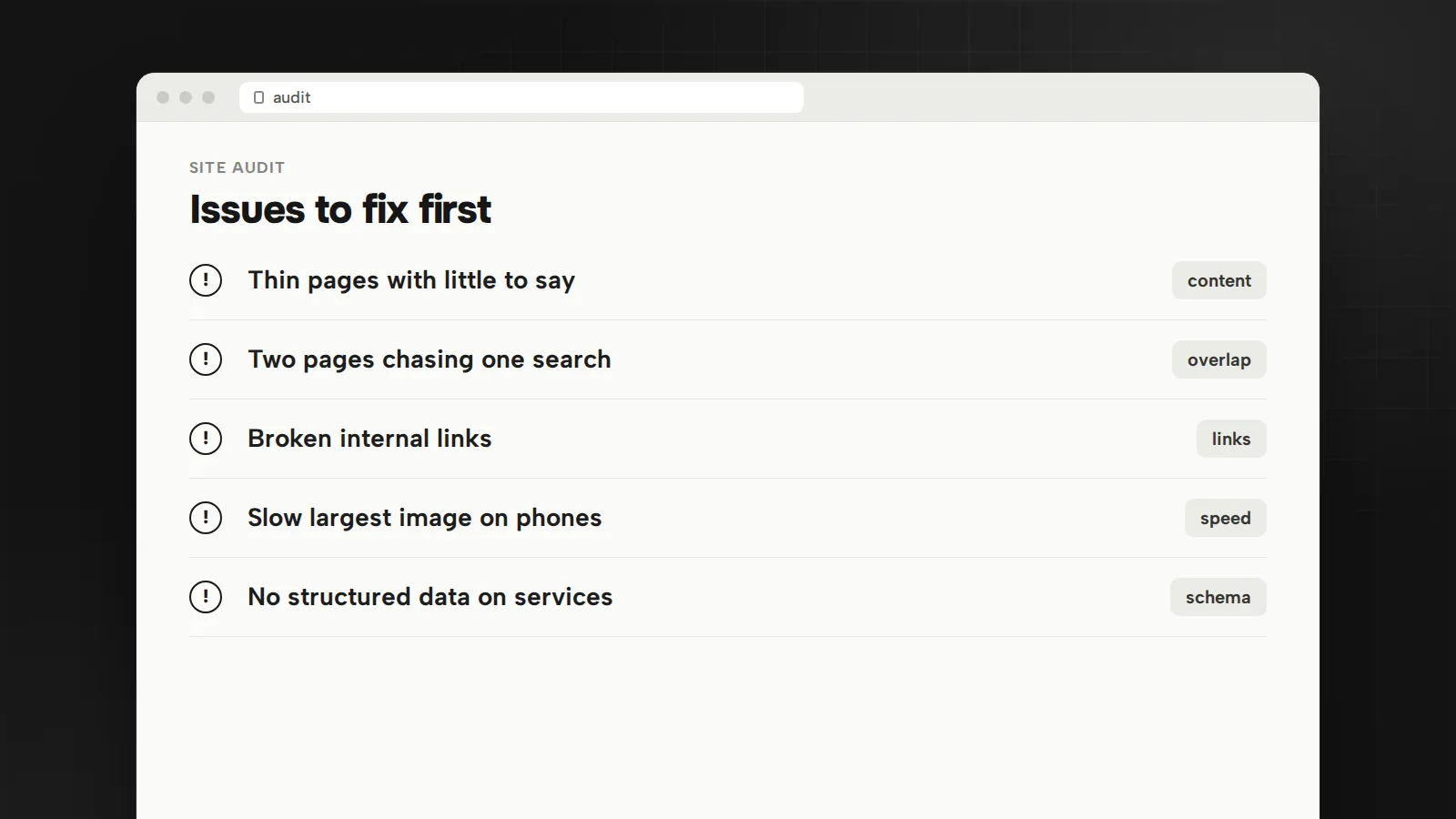
Fix whatever stops Google from reaching your pages first, then the pages closest to a sale, then content and local search. An audit like this is the first step of my SEO and AI search service, and fixes for speed, redirects and mobile layout are part of website development.
Sources
- Creating helpful, reliable, people-first contentGoogle Search Central, October 2026
- Automatically generating and ranking results (How Search Works)Google
- Understanding page experience in Google Search resultsGoogle Search Central, September 2026
- Understanding Core Web Vitals and Google search resultsGoogle Search Central, December 2025
- 404 (Page Not Found) errorsGoogle Search Console Help
- Mobile site and mobile-first indexing best practicesGoogle Search Central, December 2025
- General structured data guidelinesGoogle Search Central, July 2026
- Latest Google Search documentation updates (FAQ rich results, May and June 2026)Google Search Central
- Link best practices for GoogleGoogle Search Central, December 2025
- Conversions vs. key events in Google AnalyticsGoogle Analytics Help
- Tips to improve your local ranking on GoogleGoogle Business Profile Help
- Spam policies for Google web search (doorway abuse)Google Search Central, August 2026
- Prohibited and restricted content: fake engagement and rating manipulationGoogle Maps user contributed content policy
- My Business Q&A API change log: discontinued November 3, 2025Google for Developers, November 2025
- Google removing Q&A feature in Google Maps for AI-powered Ask buttonSearch Engine Roundtable, December 2025

Bugrahan Unsal is a B2B and B2C marketing director in Toronto. He leads marketing for Glass Railing Store and RF Transparent and builds AI tools and websites. More about Bugrahan.
Follow on LinkedIn (opens in a new tab)